
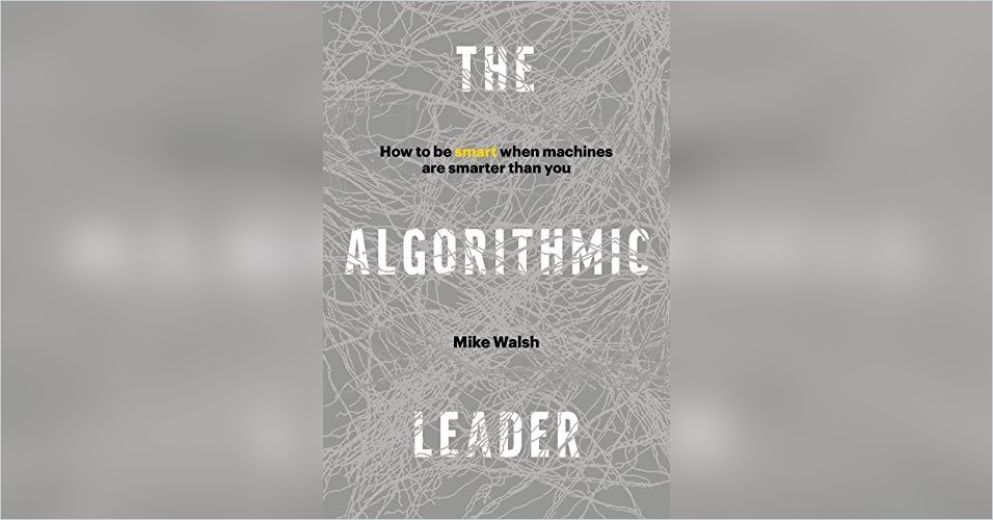
I picked up Mike Walsh’s The Algorithmic Leader during a quiet train ride, expecting a pleasant summary of digital transformation. Instead, I found myself underlining entire paragraphs. The book doesn’t preach technical mastery or futuristic visions. It talks about leaders who learn to shape the conditions in which their organisations think, decide and move. That struck a chord.
Every week I sit with teams who ask for new tools, new models, new automations. The enthusiasm is welcome. The pressure to move fast is real. But what Walsh highlights feels far more fundamental. The real transformation begins with the way we design our organisations. The habits we cultivate. The clarity we set around decision rights. The way we treat data as a living asset instead of an afterthought. The technology comes after.
Reading it, I caught myself thinking about the moments where organisations either accelerate or stall. The difference rarely comes from the tool. It comes from people who understand how to work with complexity instead of fighting it. Teams who use information to anticipate instead of react. Leaders who create enough structure for people to feel safe, and enough freedom for them to experiment without permission slips. That is the part of the book that stayed with me. The modern CIO stands right in the middle of all this. We carry innovation, risk, governance, operations, cybersecurity, sustainability and culture in the same backpack.
One day we talk about carbon footprint, the next about data lineage, the next about process simplification. AI only amplifies this reality. There is no linear path forward, only a series of adjustments that shape how the organisation learns and adapts.
Walsh doesn’t hand out formulas. He invites leaders to pay attention to the system they are building. The rhythm of decisions. The relationships between teams. The quality of information. The behaviours that spread, silently, through the corridors and video calls. When those elements align, technology multiplies their effect. When they don’t, even the best solutions stall.
For me, that is the lesson. Leading in an algorithmic age is less about chasing breakthroughs and more about creating the conditions where people and systems can evolve together. The pace will keep accelerating. The expectations will keep growing. The role of leadership is to offer coherence. The rest follows.