
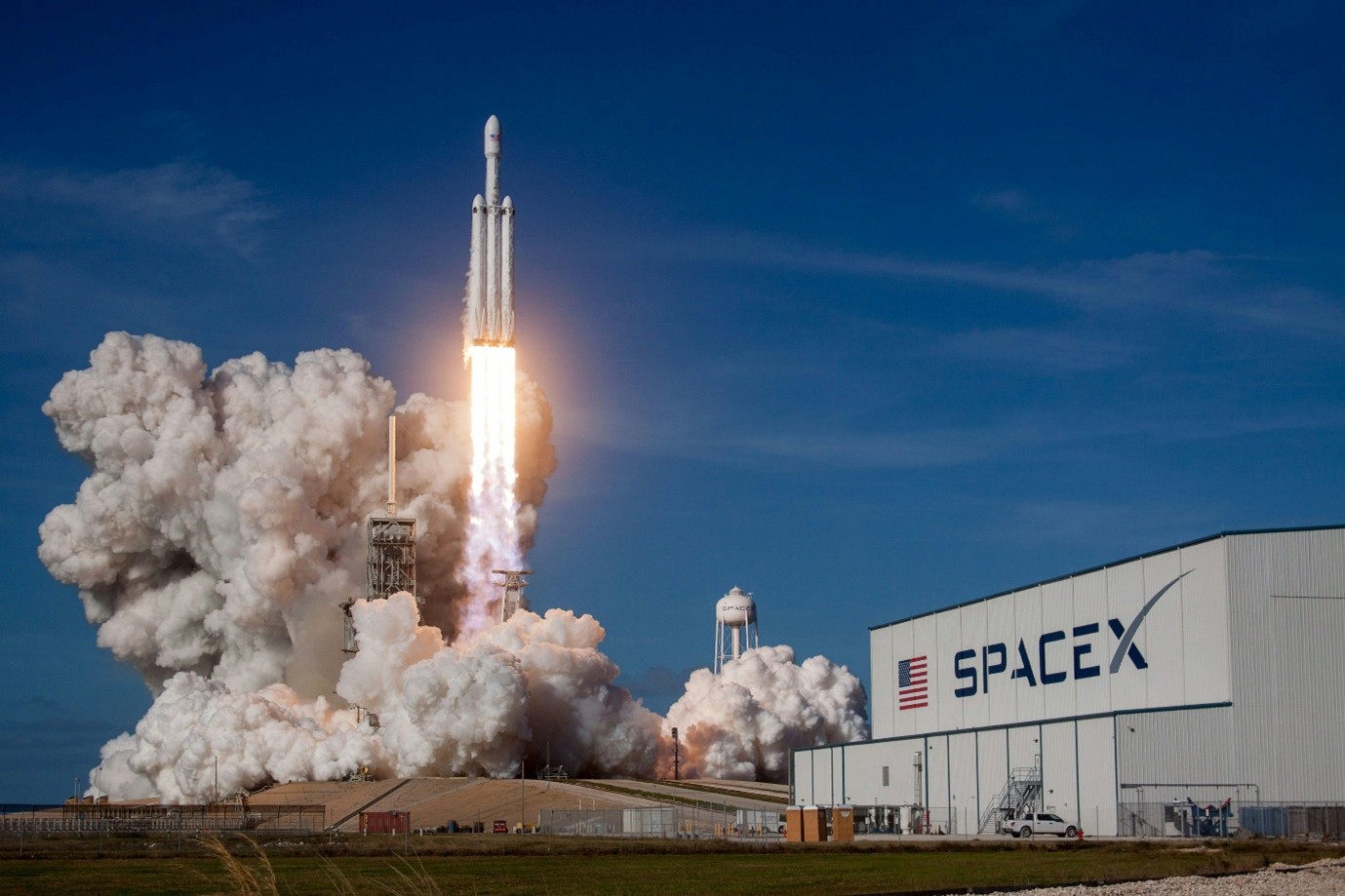
I woke up to the kind of notification storm that makes you think you missed a coup. Messages, screenshots, hot takes, charts, group chats pretending they’re investment committees. SpaceX had acquired xAI, and within minutes the conversation had already sprinted past the deal into the usual extremes: either the beginning of a new empire, or the final proof that reality has been replaced by a meme.
I did what I always do when the volume spikes. I tried to slow it down and ask a simpler question: what problem does this merger actually try to solve?
The trillion-plus valuation story is the easy part. The most repeated figure is a combined value around $1.25 trillion, with back-of-the-envelope numbers often cited as roughly $1 trillion for SpaceX and $250 billion for xAI. Reuters reported that framing when the news broke, and it’s the number that will keep circulating because it’s clean, cinematic, and easy to weaponize in a slide. That is the headline, it is not the substance.
The substance is that advanced computing is running into constraints that have nothing to do with cleverness. Electricity, cooling (water), land, permits, grid connection delays, the social license to build… The conversations are increasingly heated: not “what can we do,” but “what can we power,” “where can we host,” “how fast can we build,” “who will sign off,” “what will the regulator accept,” “what will the local community tolerate.” The constraint is becoming industrial. That is the lens through which this deal makes sense to me.
SpaceX is not just rockets. It is cadence, logistics, operations at scale, and an ability to build infrastructure where most organizations only produce strategy decks. xAI is not just a lab. It is a fast-moving capability that will keep demanding more capacity. Put the two together and you get a single narrative powerful enough to raise absurd amounts of capital: more capacity, in places where capacity is easier to secure.
The conversation moves quickly to orbital data centers. A plan that has already started to show up as filings and requests with regulators. The claim is straightforward: orbit offers abundant solar power, and thermal management becomes a different engineering problem than fighting for water rights, grid upgrades, and planning permission. Nobody should pretend it’s simple. Space does not magically cool your hardware, and operating in orbit comes with its own brutal constraints. But the ambition is coherent: if the bottleneck is energy and cooling on Earth, try moving the bottleneck.
What makes this more than cocktail talk is the scale being floated. We’re not talking about a handful of experimental platforms. The number that keeps appearing is a constellation running into the hundreds of thousands, even a million satellites in the most aggressive versions, positioned as an “orbital data centre” network. At that magnitude, it stops being a niche project and becomes an attempt to industrialize a new layer of infrastructure.
At this point, I can already hear the objections, because they’re valid. Latency. Hardware reliability in a harsh environment. Replacement cycles. Servicing. Insurance. Spectrum governance. Collision risk. Space debris. The economics of lifting mass repeatedly, even with falling launch costs. The list is long and real. Even people who take the concept seriously tend to call it speculative, because the hard parts sit in operations and unit economics, not in the slogan. And yet I still think this announcement matters, even if the orbital plan never scales the way the filings imply.
It matters because it signals where the competitive frontier is moving. For years, the attention was on who had the smartest systems. Now the advantage increasingly sits with whoever can secure capacity, power it, cool it, and keep it running. In other words: who can treat compute like heavy industry. Most organizations are not set up for that mindset. Many leadership teams still talk as if computing were an elastic service you can order, rather than a physical capability constrained by energy, materials, time, and permissions.
There is also a less discussed but very practical angle. This deal bundles distribution, data flows, connectivity, and infrastructure ambition under one roof. xAI already absorbed X in a prior move, so the combined story is not just “build,” but also “deploy,” “reach,” “iterate.” In simple terms, it reduces dependency on external platforms and external capacity at the very moment those dependencies are getting more expensive and more politically exposed.
My internet blew up for a reason. It is a spectacular transaction with spectacular numbers. But the reason I’m paying attention is not the valuation. It’s the admission behind it.
We are entering a period where the limiting factor is less “what is possible” and more “what can be powered, cooled, approved, and sustained.” SpaceX acquiring xAI reads to me as a bet that the next decade will reward the actors who take that constraint seriously enough to redesign the map.
The outcome is uncertain. The direction is not.